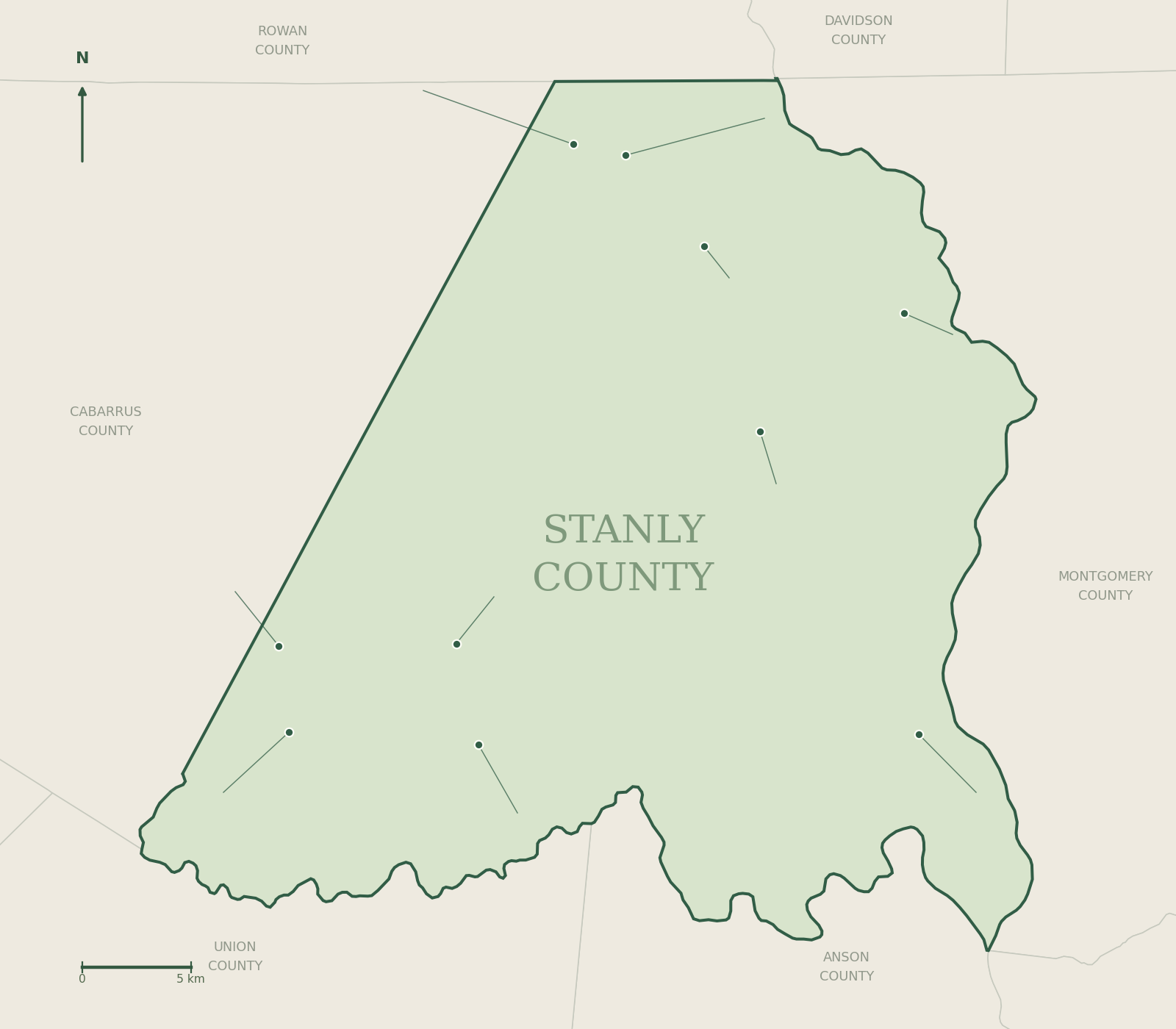
The modern county line is a recent layer on a much older landscape. Rivers, stone resources and travel corridors mattered long before county government or industrial dams. A responsible history begins with that wider frame rather than treating the land as empty before European settlement.
Read the landscape carefully
Morrow Mountain and the Yadkin–Pee Dee corridor provide starting points for learning about geology and archaeology. Distinguish archaeological periods from the names of living Native nations, and do not assume that a modern place name establishes a particular tribal connection.
Learn without disturbing
Use museum interpretation and professional archaeological sources. Leave artifacts where they are, respect protected sites and private property, and avoid publishing precise locations that could encourage disturbance. A photograph, a labeled map and a properly cited museum source can tell a story without removing an object.
Continue with museums and collections or plan a visit using the Morrow Mountain guide.
Browse the complete guide →Keep exploring Stanly history
Rivers, rail, mills and the towns they built.
 County originsHow Stanly was formed in 1841
 Towns & communitiesFrom Badin to Big Lick
 IndustryDams, aluminum and textile mills
 MuseumsWhere to see the county story
 Historical markersEvery marker, mapped
 Rosenwald schoolsKingville and community education
 Research toolsArchives, deeds and family history